Is Tire Sealant Safe for TPMS? What to Check First
This site is sponsored by LiQuiTube. Learn more.
Some tire sealants are compatible with some TPMS systems, but the answer depends on the exact product, sensor, and installation instructions. Check all three before adding sealant; a general “TPMS safe” statement does not establish that every installation method is suitable.
Identify the monitoring system first
TPMS means tire pressure monitoring system. Before buying sealant, find out how your vehicle or equipment monitors pressure.
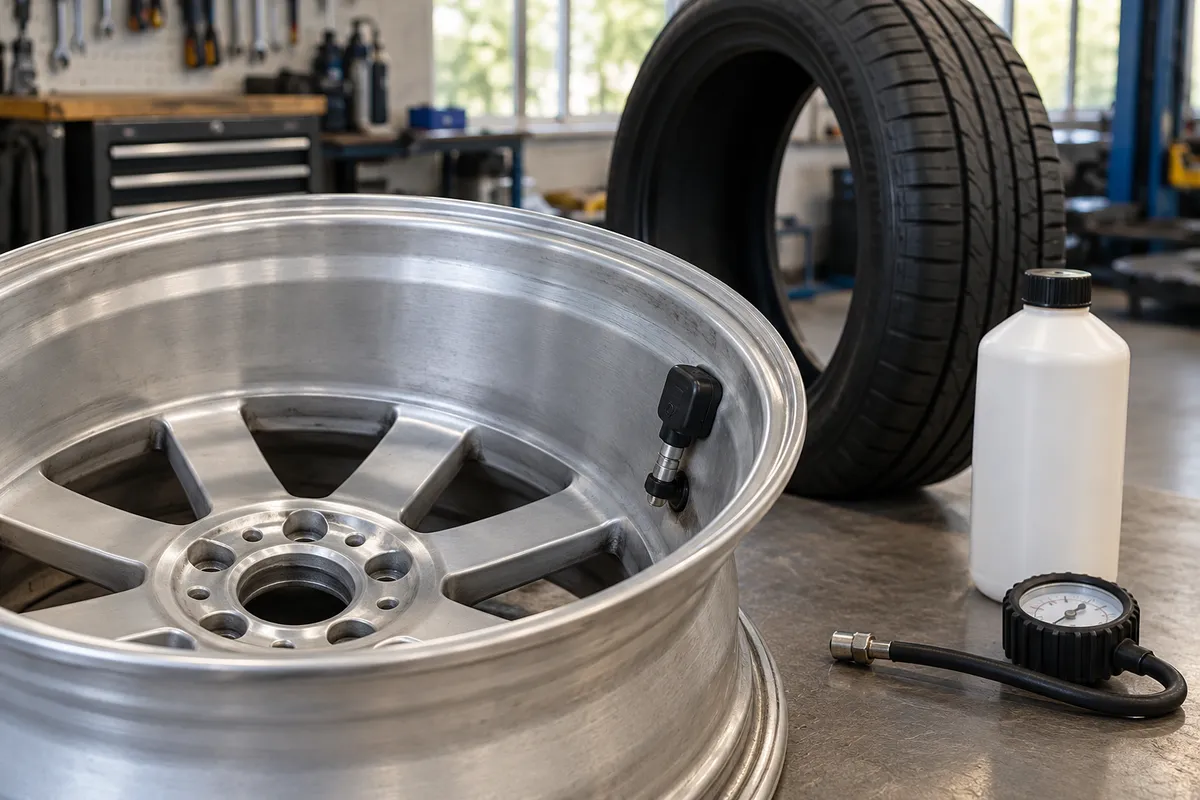
A direct system uses pressure sensors associated with the wheels. Depending on the setup, a sensor may sit inside the tire or attach externally to the valve. An indirect system estimates pressure changes using wheel-speed information and other vehicle sensors instead of measuring pressure inside each tire.
NHTSA explains the distinction between direct and indirect TPMS. Your owner’s manual or sensor manufacturer’s instructions should identify your particular setup.
Do not identify a system from the valve stem’s appearance alone. If you cannot confirm the sensor type, ask the tire shop to identify it before choosing a product or installation method.
Read the exact product instructions
“Safe for TPMS” is only the starting point. Read the current label and application guide for the exact sealant you intend to use, rather than relying on a retailer’s summary or instructions for a different bottle.
Check these items:
- Intended use: Is the product for emergency mobility, preventive use, or another stated purpose?
- Tire application: Does the guidance cover your tire construction, vehicle, and operating conditions?
- Sensor compatibility: Does it address your sensor design, including any qualifications?
- Installation route: Is installation through that valve permitted, or is another procedure required?
- Follow-up: What inspection, servicing, removal, or replacement instructions apply afterward?
A product intended for one application should not automatically be carried over to another. A mower, highway trailer, motorcycle, and commercial truck can have different tire and equipment requirements.
If the sealant instructions and vehicle or sensor instructions conflict, get clarification from the relevant manufacturers before proceeding. Do not resolve the conflict by choosing whichever instruction is easier.
Treat compatibility and installation as separate checks
A sensor compatibility statement does not automatically authorize pumping sealant through a sensor-equipped valve. Check the permitted installation route separately.
Avoid treating a general online installation video as instructions for your wheel. Confirm the sensor position and follow the product’s procedure before removing components or connecting an applicator.
If the required procedure involves removing the tire from the wheel, have a tire shop handle it unless you have the appropriate training and equipment. Ask the technician to confirm compatibility before opening the product.
For an external valve-cap sensor, consult that sensor’s instructions too. An externally mounted device changes the arrangement, but it does not remove the need to check the sealant, tire, valve, and equipment requirements.
How to evaluate LiQuiTube’s TPMS statement
According to the maker’s FAQ, LiQuiTube is safe for hermetically sealed TPMS sensors when installed directly into the tire before the tire is mounted on the rim. It must NOT be installed through a valve stem that has a TPMS sensor.
Keep the compatibility question separate from dosage. LiQuiTube’s recommended amount depends on tire size; use our tire sealant calculator for yours.
Other brands should receive the same review. Compare their current instructions for your application rather than assuming all products carrying similar wording have identical requirements.
Choose the amount after confirming suitability
Start with the tire size shown on the sidewall and the exact product you plan to install. Record the equipment type and operating use, then check the manufacturer’s dosage guidance.
Our amounts by tire size pages can help you find the relevant size. Use the tire sealant calculator to look up an amount, while checking any application conditions in the current product instructions.
A calculated quantity does not approve a product for a particular sensor or vehicle. Complete the compatibility check first.
Do not substitute a balancing-bead quantity for a liquid-sealant amount. If you are considering beads as well, check both manufacturers’ guidance before combining products in one tire; separate suitability statements do not establish that the combination is approved.
Give the tire shop useful information
Before service, tell the shop whether sealant is already present. Bring the product name, label or application guide, approximate amount added, and installation date if you know them.
Ask practical questions before the work begins:
- Can you identify this wheel’s sensor and check the applicable instructions?
- Does this product’s installation method suit this valve and sensor?
- What inspection or service is required after using this sealant?
- How will you check pressure readings and monitoring operation afterward?
For a fleet, record this information against the vehicle and wheel position. A service note helps the next technician understand what is inside the tire without guessing.
Keep checking pressure after installation
Sealant does not replace pressure checks, leak diagnosis, or tire inspection. Follow the vehicle or equipment manufacturer’s pressure guidance and check with a suitable gauge.
NHTSA’s tire guidance explains that TPMS is not a substitute for regular tire maintenance. Do not wait for a dashboard warning before checking a tire that appears to be losing air.
If a warning appears after installation, check pressure and follow the owner’s manual. Do not assume sealant caused the warning, and do not reset the system simply to hide it.
If pressure keeps dropping, arrange an inspection rather than repeatedly adding product. Visible damage, an unexplained leak, or uncertain sensor operation needs assessment before you depend on the tire again.
FAQ
Does “TPMS safe” mean every sensor is covered?
No; check the exact product guidance for sensor qualifications and application limits. Confirm compatibility with your vehicle or sensor manufacturer when the instructions do not clearly cover your setup.
Can I put sealant through a TPMS valve stem?
LiQuiTube must NOT be installed through a valve stem that has a TPMS sensor. For other products, use that route only if their instructions and the applicable sensor guidance permit it; ask the manufacturer or tire shop if you cannot confirm the procedure.
Will sealant turn off my TPMS warning light?
Do not use sealant as a way to clear a warning. Check actual pressure, investigate the cause, and follow the vehicle’s instructions for restoring normal monitoring operation.
Should I tell the tire shop that I used sealant?
Yes; provide the product name and any installation details you have. Ask the shop what tire inspection and sensor service the applicable manufacturers require.